
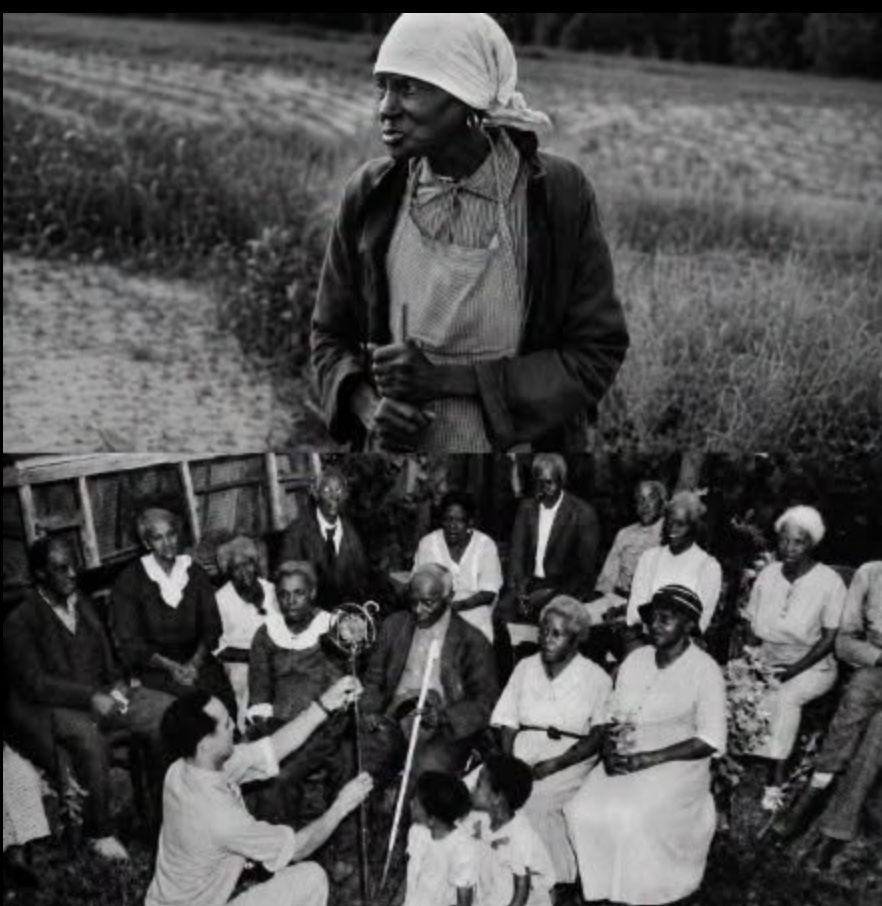
Mary Armstrong’s story is one of those historical moments where the written word and lived reality violently contradict each other, exposing how fragile “freedom” could be when placed against the machinery of slavery-era America.
She was a free woman on paper. She carried emancipation documents issued and signed by the State of Missouri—legal proof meant to guarantee her status and protect her from being treated as property. Those papers were not symbolic. In theory, they were the law itself, a shield recognized by courts and authorities. In theory, they should have ended any possibility of her being sold, traded, or claimed by anyone else.
But history often shows that in practice, especially in places where slavery still held power and profit, paper was not always stronger than prejudice, greed, or enforcement failure.
When Mary Armstrong was taken to Austin, Texas, she was placed into a system that still treated Black bodies as commodities, regardless of documentation. The auction block was not a neutral legal space—it was a marketplace built on the assumption that Black people could be owned. And in that environment, even a legal claim to freedom could be ignored, disputed, or deliberately erased.
They stood her on that block anyway.
The detail that she had her emancipation papers folded in her dress is especially haunting. It turns the moment into something deeply symbolic: a legal identity physically carried on her body while that same body was being treated as property. The paper represented recognition from one state, but the auction block represented the reality of another system that refused to acknowledge it.
In that moment, Mary Armstrong existed in two conflicting legal worlds. In one, she was a free woman with documented status. In the other, she was being priced, displayed, and subjected to the logic of ownership. The violence of that contradiction is difficult to overstate. Freedom was not simply granted; it had to survive contact with systems that often chose profit over law.
What makes her story so important is not only the injustice itself, but what it reveals about how freedom functioned unevenly across time and place. In the mid-19th century United States, especially in border regions and slaveholding states like Texas, the enforcement of emancipation papers depended heavily on whether authorities chose to respect them. Paper could declare freedom, but it could not guarantee safety or recognition in every courtroom, town, or auction yard.
For Mary Armstrong, the papers did not prevent the auction. Instead, they became a quiet witness to it. They represented a truth that was real in one sense, yet powerless in another. The system that was supposed to protect her legal status was the same system that allowed it to be ignored.
This is where her story moves beyond one individual and becomes a reflection of a larger historical reality. Many free Black individuals in the antebellum United States lived in constant vulnerability, even when legally emancipated. Kidnapping, illegal sale, and re-enslavement were documented risks, particularly in regions where slavery was deeply entrenched and enforcement of free status was inconsistent or corrupt.
In Mary Armstrong’s case, the act of placing her on the auction block in Austin symbolizes more than personal tragedy. It represents the breakdown of legal protection in the face of systemic power. It shows how freedom, when not universally enforced, can become conditional—respected in one place, denied in another.
The emotional weight of her story also lies in its silence. We do not have her full voice preserved in detail. What remains is the image: a woman standing on a block meant for sale, holding proof that says she should not be there. That contrast does most of the storytelling on its own.
It forces us to confront a difficult truth about history: that legality and justice are not always aligned, and that documents alone cannot guarantee dignity when systems are built to override them.
Mary Armstrong’s story survives because of that contradiction. It survives because it exposes the gap between law and lived reality. And it survives because it reminds us that freedom, in many historical moments, was not simply declared—it had to be defended, recognized, and sometimes fought for in spaces that were never designed to honor it.
In the end, her presence on that auction block is not just an image of injustice. It is an indictment of a system where even official freedom could be made invisible when power chose to look away.
I put a lot of effort into researching and sharing stories that matter. If you’d like to support the work, here’s the link:
https://buymeacoffee.com/blackhistorystories
Every coffee helps me keep creating
